Voices
The artists the music is made with, the panel guests, the singers, the partners and the press.
From the people the songs come from
We have worked with young people and with the last generations of Kukama speakers on music projects that help us revitalise the language and strengthen the identity of the new Kukama generations.
I know the work Mathias intends to do, and I believe what he has above all is a genuine intention to serve as a link between the Kukama and his people.
I would like this work to be a remembrance of what we are searching for and what we want, why we defend the Marañón River, and why it is important to protect Mother Nature.
For the Kukama people, my people, the river is much more than a body of water: it is life, and the home of many of us.Danna Gaviota · Kukama singer-songwriter, Peru
Language develops in that mixture, and that is what rehabilitates a language: more speakers.Marco Herrera · Director, Correlación Contemporánea, Iquitos
At the climate summits
There were hundreds of people in the room. There wouldn't have been 100 people there listening to me talk about the forest.
We saw the same as you saw in Belém, but we also had a huge choir that sang some of the anthems from the Amazon forest. And you could really see the young people taking it in, in another way than if I was just standing there talking about climate.
Culture creates climate literacy. People are able to understand climate knowledge from their own perspective.
I believe in the power of bringing different disciplines together to create change.
I feel that creativity is an opportunity to bring people together in a fun way, to talk about hard things in a creative way.
They received us with music, because that's how they receive people in the village. That became the theme of the first movement.
Art is very important, because it touches us emotionally.
Sometimes if you want people to protect the forest, you have to make them love the forest.
Singers and musicians
I hope they will be happy and surprised that someone up here in the cold north enjoyed singing their songs in their language, and that they can feel proud of it.
The wild thing about this work is that we get to give that experience to someone.
It's a language that is dying out, so it's really special to be allowed to sing it.
We bring their story out, to us and to them, in their own language.
I think what matters most are the people who live beneath this forest. They are the true guardians of our forest.
What others say
At a time when division and short-term interests too often dominate, culture, and especially music, can cut through. It creates a shared space where we listen, connect and recognise what is at stake.
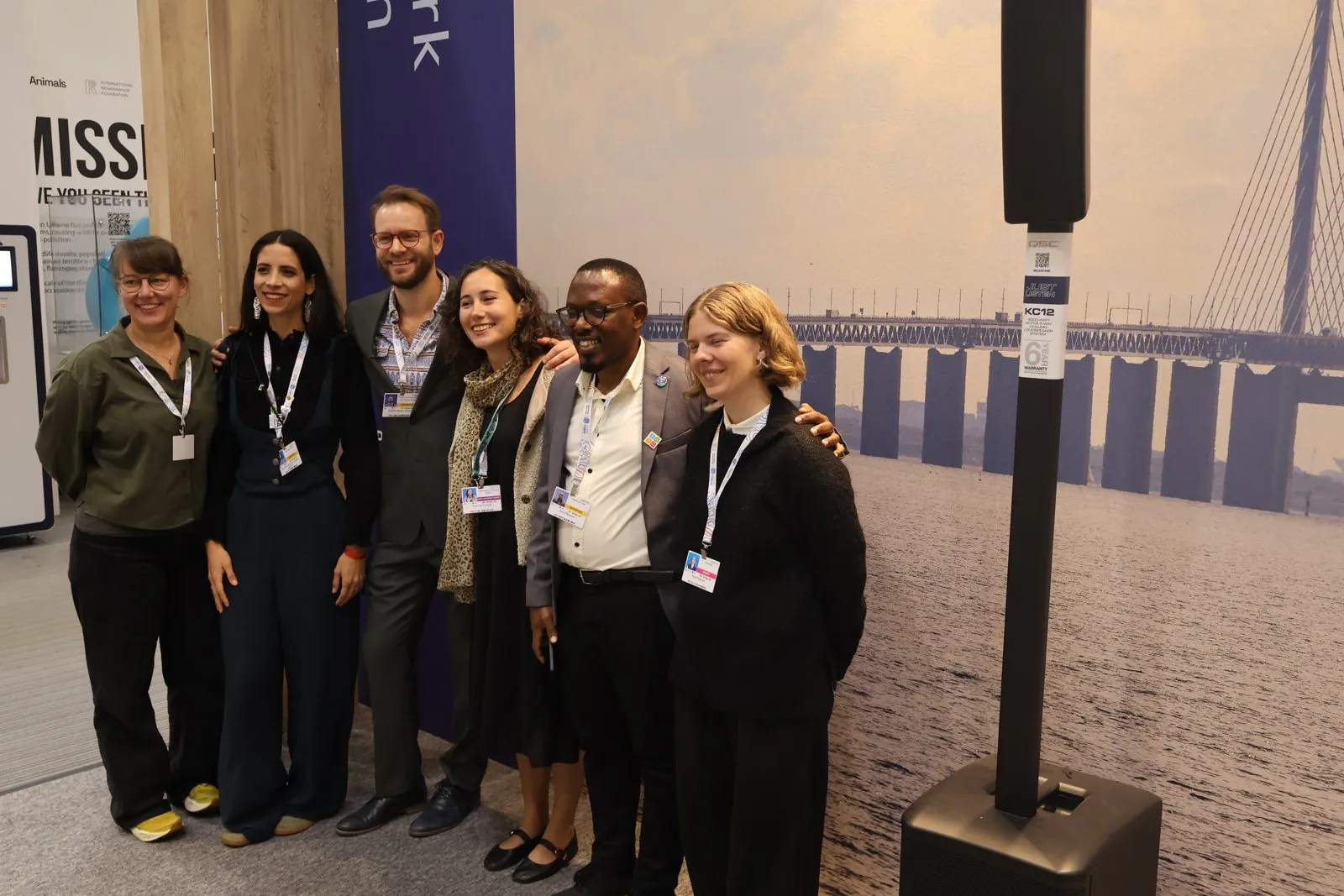
If some of the photos are a little blurry, we blame BIOFONIA's music and the Turkish dancing that followed.
When we don't dare to think big, we don't dare to make the big decisions either.
We need to create new narratives of climate change and engage more people in a new way. And I also see music as a very important part.
They met us with art. We can just meet and make art.
With BIOFONIA we seek to approach the difficult conversations about global sustainable development, the central theme of COP30, through art and culture.
The project has fostered a cultural exchange between young people in Denmark and the Guaraní people in Brazil, to tell their story and highlight their situation in the rainforest. BIOFONIA has certainly achieved this.
Sometimes you just need a break, and to have it served in another way, which art can do. You see how people both relax and get engaged in a whole other way.
With BIOFONIA it is clear that this kind of collaboration creates ripples and is relevant to a broad audience of festival-goers and citizens alike.
Very beautiful. It speaks to both the mind and the heart. It touched both me and my 7-year-old son.
It made us reflect on the fact that, as a society, we haven't taken better care of the world and nature.
I am here for one reason, and I didn't discover it until now: probably the reason is to help Mathias spread this project in Peru.
It must be wild: people you don't even know, gathering to sing a big work, and it's something so close to someone's heart on the other side of the world.
There are real people behind this language, and the songs we sing are some of their songs.
BIOFONIA is an outstanding example of how art and culture can open new sensory channels and perspectives on the meaning of nature, locally and globally.
BIOFONIA is a fantastic animated concert experience that lets us step into the rainforest and encounter its beauty.
It's not just a melody; you can hear how the Indigenous people sing it.
It shows the kids that music is used for more than just scrolling around and listening casually. Getting a visit from “pros” is always awesome, and it gives the kids a broader perspective.
Both myself and my art students were very excited. Several students later described how deeply moved they were by the performance.
In the press and in the reports
- 18 Dec 2025TV 2 · Go' Morgen Danmark. Ten minutes live on national morning television.
- Jan 2026DR P2 · PULS. National classical radio.
- 14 Dec 2025Verdens Bedste Nyheder. Mathias creates the music of the rainforest together with its original peoples.
- 11 Nov 2025Portal Guarany Júnior, Brazil. On the concert in Belém.
- Sep 2026OpEn annual report 2025. AMAZONICA as a case in the annual report from the Danish Ministry of Foreign Affairs and CISU, pages 26 and 27.
- 31 May 2026LigeHer.nu. BIOFONIA gave the Amazon a voice at Naturmødet.
- 30 Jan 2026NordsøPosten. Nordjysk Pigekor in front when BIOFONIA comes to Naturmødet.
- Summer 2026Politik & Samfund, Nordjylland. Two television programmes from Naturmødet.
- Nov 2026State of Green Denmark. On the Danish reception at COP31.